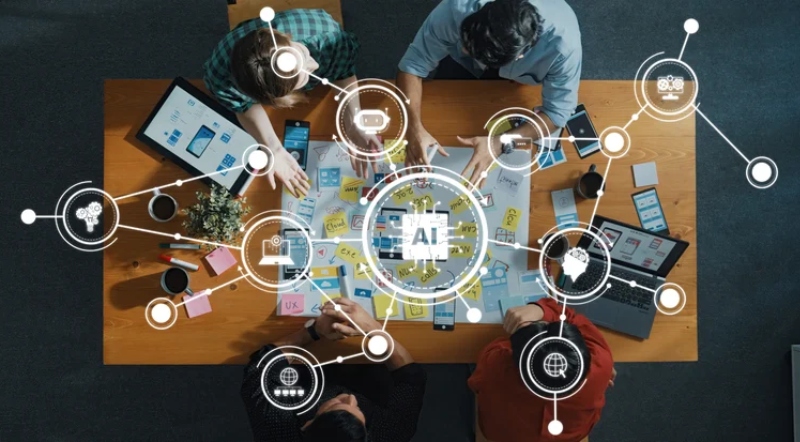
Running a small business has never been easy. Owners often wear multiple hats at once, switching between customer service, marketing, accounting, operations, and content creation all within the same day. Unlike large corporations with specialized departments and larger budgets, small businesses usually have to find ways to do more with fewer resources. That pressure has always existed, but in recent years, technology has begun to change the situation in a meaningful way. Artificial intelligence, once considered something only large tech companies could afford, is now becoming accessible to businesses of all sizes.
What makes AI particularly valuable for small businesses is not that it replaces people. It helps people work more efficiently. It reduces repetitive tasks, speeds up processes, improves decision-making, and allows business owners to focus more energy on growth and creativity rather than constant operational stress. Many entrepreneurs initially felt intimidated by AI tools because they sounded overly technical or expensive. But the reality is that many modern AI solutions are surprisingly practical and user-friendly. Small businesses are already using them every day, often without even realizing it.
Whether it’s automating customer communication, improving marketing, organizing data, or simplifying content creation, AI is helping small businesses compete in ways that were much harder just a few years ago.
AI Is Giving Small Businesses More Time
Time is one of the biggest challenges for small business owners. There are always emails to answer, schedules to organize, customers to manage, and tasks competing for attention. One of the biggest advantages of AI tools is their ability to automate repetitive work. For example, customer service chatbots can answer common questions instantly, reducing the amount of time owners spend handling routine inquiries. Scheduling software automatically organizes appointments and sends reminders. AI-powered email tools help businesses respond more efficiently without writing every message from scratch. These small improvements add up quickly.
Instead of spending hours every week on repetitive administrative work, business owners can focus on building customer relationships, improving products, or planning long-term growth strategies. The goal is not to remove human involvement. It is reducing the unnecessary workload that drains time and energy.
Marketing Has Become More Accessible
Marketing used to be one of the most difficult areas for smaller businesses because professional campaigns often required large budgets or specialized teams. AI has changed that dramatically.
Today, small businesses can create professional-looking content, improve social media strategies, write marketing copy, and analyze campaign performance using tools that are affordable and easy to use. A local bakery, for instance, can use AI-assisted design tools to create promotional content for seasonal products. A fitness coach can generate social media captions more quickly. A small online shop can automate email campaigns based on customer behavior. These tools help businesses maintain consistent visibility without requiring significant time.
AI also helps business owners understand performance data more clearly. Many platforms now simplify analytics by turning complex numbers into visual reports and easy-to-read insights. Some businesses even use a graph generator to present sales trends, customer growth, or campaign performance in a more visual and understandable way. This makes decision-making far less overwhelming for people without strong technical backgrounds.
AI Helps Businesses Understand Customers Better
One reason large companies traditionally had an advantage was access to customer data and research tools. Smaller businesses often had to rely on intuition alone. AI is helping close that gap.
Modern platforms can analyze customer behavior, purchasing patterns, and engagement trends much faster than manual processes ever could. For example, online stores can now recommend products based on browsing history. Restaurants can identify peak ordering times. Service providers can personalize communication according to customer preferences. These insights help businesses create experiences that feel more relevant and personalized. Customers appreciate businesses that seem to understand their needs.
AI tools help companies gather and organize information to improve those interactions without requiring an enormous marketing department. At the same time, personalization must still feel genuine. Businesses that rely too heavily on automation without maintaining authentic communication often lose customer trust. The strongest results usually come from combining AI efficiency with human understanding.
Content Creation Became Faster and Easier
Creating consistent content is one of the biggest challenges for small businesses today. Websites need updates. Social media accounts require regular posts. Marketing campaigns need visuals, captions, videos, and newsletters. For small teams, keeping up with content demands can feel exhausting.
AI tools now help speed up many parts of the creative process. Businesses can brainstorm ideas faster, edit images more efficiently, generate draft copy, and organize campaigns without starting from scratch every time. This does not mean creativity disappears. Human input still matters deeply. But AI reduces the time spent on repetitive production tasks, giving creators more room to focus on strategy and originality.
For example, a small consulting business might use AI to draft blog outlines, then refine them manually. A local retailer may use automated design tools to create promotional graphics quickly for holiday campaigns. The result is often greater consistency and faster execution without significantly increasing workload.
Financial Management Is Becoming Simpler
Many small business owners struggle with financial organization, especially during periods of growth. AI-powered accounting and finance tools now help automate expense tracking, invoice generation, payment reminders, and financial forecasting.
This reduces human error while making financial management feel less intimidating. Some systems can even identify spending patterns or alert owners to unusual transactions automatically. For businesses without full accounting departments, these tools create much-needed structure and visibility. Better financial organization often leads to better business decisions overall. When owners clearly understand cash flow, sales trends, and operational costs, planning becomes far more manageable.
AI Supports Smarter Decision-Making
Running a business often requires making quick decisions with limited information. AI helps by organizing data into clearer insights. Instead of manually reviewing spreadsheets for hours, business owners can quickly identify trends, customer behaviors, and operational bottlenecks through AI-powered dashboards and reporting tools.
Visual presentation also plays a major role here. Many businesses use reporting platforms and tools like a graph generator to simplify internal reports, presentations, or performance reviews for teams and stakeholders. When information becomes easier to understand, decision-making becomes less stressful. Of course, AI cannot replace business instincts entirely. Experience, creativity, and judgment still matter. But having access to organized insights helps owners make more confident choices.
Small Businesses Can Compete More Effectively
Perhaps the most important impact of AI is that it gives smaller businesses tools that were once available only to larger organizations. A small online store can now run sophisticated email campaigns. Independent creators can produce high-quality marketing content. Service-based businesses can automate scheduling and customer communication.
This creates more competitive opportunities. Instead of relying solely on size or budget advantages, businesses can now compete through speed, personalization, creativity, and efficiency. Customers also care more about convenience than ever before. Businesses that respond quickly, communicate clearly, and provide smooth experiences often stand out regardless of company size. AI helps smaller businesses meet those expectations more consistently.
Human Connection Still Matters Most
Even with all the advantages AI provides, one thing remains true: people still want human connection. Customers remember kindness, trust, honesty, and authentic experiences far more than automation itself. Businesses that rely entirely on AI-generated communication without personal interaction often feel robotic or disconnected. The most successful businesses usually use AI as a support system rather than a replacement for human relationships.
They automate repetitive tasks while still maintaining real communication with customers. They use AI to improve efficiency while protecting creativity and authenticity. Technology works best when it strengthens human experiences rather than removing them entirely.
The Future Looks Promising for Small Businesses
AI technology continues evolving rapidly, and many tools are becoming even more accessible for smaller companies. What once required technical expertise can now often be done through simple, user-friendly platforms. This shift is creating new opportunities for entrepreneurs, creators, and local businesses around the world. At the same time, businesses must remain thoughtful about how they use these tools. Chasing every trend without a clear purpose can create confusion instead of growth. The most valuable AI tools are usually the ones that solve practical problems, reduce stress, and help businesses focus on meaningful work.
Conclusion
AI is changing the way small businesses operate, not by replacing people, but by helping them work more efficiently and strategically. From automating repetitive tasks and improving marketing to simplifying analytics and enhancing customer experiences, AI tools are making growth more accessible for businesses with limited time and resources.
What makes this transformation especially important is accessibility. Small businesses no longer need massive budgets to benefit from advanced technology. Many AI tools are affordable, practical, and easy to integrate into everyday operations.
Whether it’s organizing customer insights, improving content creation, simplifying financial management, or using tools like a graph generator to visualize business performance, AI is helping entrepreneurs make smarter decisions while reducing operational pressure.
The businesses that grow most successfully in the future will likely be the ones that combine technology with genuine human connection. Because while AI can improve efficiency, people will always remain at the center of meaningful business growth. For more details, Click here